",but then you read": A Personal Reflection on a Lifetime Of Reading
A personal reflection of myself as a reader and an appreciation for the written word.
“The problem in our country isn't with books being banned, but with people no longer reading. You don't have to burn books to destroy a culture. Just get people to stop reading them.” - Ray Bradbury
I started wondering one day: Do you remember falling in love with reading? Or, maybe, the first book you read? Or the books that changed you?
For me, the middle question has no definitive answer. I wish I could remember. However, the first and last questions opened the floodgates of personal reflections as a lifelong reader. These reflections conjure memories of the emotions, people or places attached to the books, essays, poems, journals and more that shaped my life. These memories offer an explanation of why the written word, and devoting time to reading it, remains important in a digital age. The things I have read over the years and my approach to reading make up the soul of my being. I want to answer these questions, reflect and share with you my life as a reader.
Though I cannot remember the first book I read, I do remember books always being at my fingertips or in the corner of my eye. Whether stacked high in my Dad’s office, on display on coffee tables or behind class cabinets (Mom's precious Little House on the Prairie series), tucked neatly on the various bookshelves around the house, stuffed in closets or the copious amount of German ones at my grandparents' house, access to books never was a problem. I cannot put a number on how many there were, but it seemed endless. For the ones not found at home, trips to the library often solved that problem. Naturally, with so many around the house, I was curious. There were all kinds: novels, children's books, art books, memoirs, history books, sports books, gardening books and photography books. (A favorite of mine was a photography book on the skyscrapers of Chicago, where I grew up, that was nestled away in the basement of my grandparents' house. I always flipped through a couple of pages to revel at the immense, local feats of architecture when visiting.) As a kid, the books that surrounded me had stories that flew over my head. Their plots, characters and, certainly, their message made very little sense. Regardless, I wanted to conquer them. Until I could, I made up my own stories – using their covers and photos inside the books for inspiration.
Despite the literary richness around me, my initial passion for reading came elsewhere: the newspaper. Dad always had a copy of the newspaper (The Chicago Tribune) in his hands on the weekends or sitting around somewhere in the house. He would piece through it slowly, yet surely, then surrender it to whoever wanted it (me). I would grab it and unfurl it open on the hardwood floor next to the large windows that looked out onto the front lawn. As I sat next to the newspaper on the ground, I tried to make sense of the stories and photographs it possessed. Most of the time, I was lost: the battles in Congress; economic deals of Europe; wars and devastation in places halfway across the world; the ever-changing physical and digital landscape of the world around me. All of this chaos was a bit too complex for my mind as a kid to grasp. But I gave reading those stories a serious try every time. I had to understand them, just like Dad.
Ultimately, I found a section of the newspaper that clicked: the sports section. That was an easier world to wrap my brain around and understand. I played sports. It was a familiar language. I knew how the games worked, and I knew who the players were. I read recaps of games, dissected numbers in the box scores, read opinions on who should be traded or fired. I quickly learned that baseball, basketball or soccer, the sport near and dear to my heart, was not just a game that happened in a vacuum. There were real-world consequences and stakes. The sports page uncovered these stakes by unveiling the world of the pre-game, post-game, days off and the off-season. Players and coaches had lives and became, not just sports icons defined by their stats, but cultural and political figures. They were people trying to navigate the world we lived in, too. The sports page put the politics of life into a context I understood. What do you mean there might be a strike for Major League Baseball? You mean, they are not going to play?! WHY? Oh god, my summer is about to be so boring. The answers were in one place and unfolded each week like a Shakespearean drama. Without question, my love for reading began here.
Serious book reading happened in grade school, where I began getting books assigned to read. I remember reading The Fighting Ground in fourth grade (I thought it was cool that the author, Avi, had one name) and switching classrooms to discuss it with other fourth-grade classes. There were also school book fairs, where picking a book or two from colorful ads made choosing a book fun. You went to the book fair as a class to browse, hopefully buy and hang out with classmates. Mostly, reading while at school felt like a time to socialize. And anytime we had a "silent reading" time, it always turned into "let's not make each other laugh." The social aspect of reading in grade school became more apparent when two important book series entered our lives: The Series of Unfortunate Events and Harry Potter. I read both series with enthusiasm, as everyone seemed to be reading them. The conversations before school, at lunch or after school were littered with questions about both series. Reading became a cultural event. I had to read to keep up with friends and family.
Importantly, I think, the books in those series felt like serious reading; they seemingly had the heft and world-building a kid expects in classic literature. For me in grade school, they seemed like the novels my parents were reading – lots of pages and lots of words – and that is all that mattered to me. I took those books at face value. They had stories and characters that transported me to another world, and that was enough for me to enjoy them. Both series made me comfortable spending time by myself, because, in my mind, I was not really alone. There was a connection happening with the story on the page. Unlike newspapers, which described people or places I could see or visit, these books presented characters, places and situations that did not (and sometimes could not) exist. It felt exciting to understand this world, since the world of adults still did not always make sense. The words on the pages were so detailed and well-placed that it opened my imagination. It was a revolution in storytelling.
I continued reading books for my age: Wayside Stories from Wayside Inn, Chasing Vermeer, Artemis Fowl. I liked big, picture-filled non-fiction books, and the fiction I read was more-or-less young adult adventure books. But as grade school and middle school rolled into high school, an inner rebel introduced itself to the world. I had interests and curiosities, and the books I wanted to read were an avenue for those interests. I read about the Roswell UFO crash, the American Civil War, ghost stories, folk tales and the John F. Kennedy assassination. I read a lot, though they were not always what school expected or what one is "supposed" to be reading. The last thing I wanted was to read books assigned to me. That felt like work, and I was not interested in someone curating for me. I wanted to find books on my own. I understand teachers needed to teach something, but it sometimes felt stale. I think this mindset stemmed from English class, at times, all reading the same book. (I need to shout out to my sophomore year English teacher, Mr. Fear, who had us read short stories, Old School and dissected Bob Dylan songs instead of the normal curriculum.) I loved book reports when everyone chose different books; it was a chance to learn something new. When everyone read the same book, there was less excitement in the room. English class would go like this: the same five people would share their thoughts, most would agree, and we would go on our way. Boring. Teachers assigned annotating too. Appalling! It was not just that we were being told what to read but also how to read.
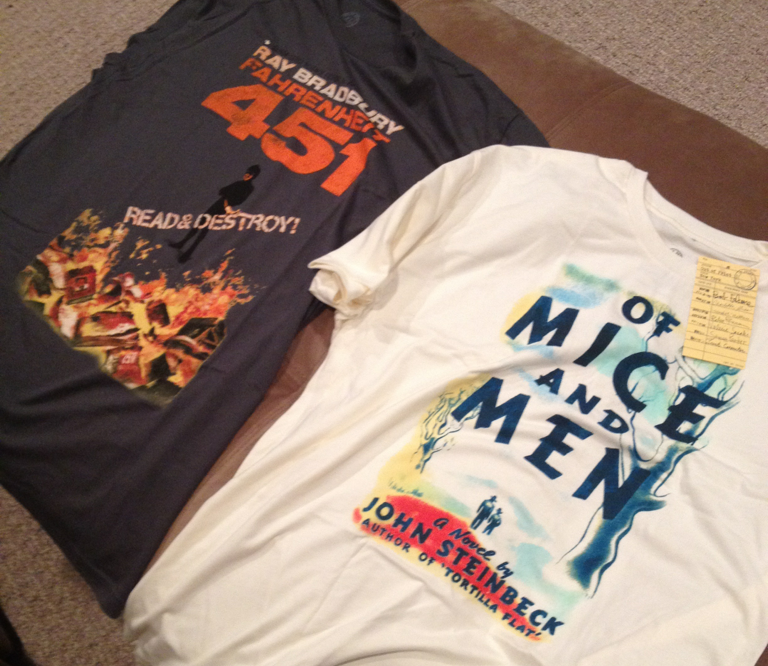
Away from the classroom, however, high school was a freeing time as a reader. The books I stumbled upon (Fahrenheit 451, Of Mice and Men and Cold Mountain) reconfigured my brain on what it meant to be a writer, how to tell a story and, even, how to read a book. Characters represented larger ideals; they wove in and out of stories that were metaphors for the real world. From these books, the very definition of a book changed. Books can be brief or extensive. They can span generations or tell about a single night. Those authors asked tough questions, but also tried to provide answers to big questions. Story is paramount for a successful book but not everything. A great book, even a good one, connects you with the past, present and future. All it took for these ideas to swirl in my head was simply reading on my own and being naturally curious about what was on the page.
In college, there was even more freedom, and I utilized it to the fullest potential. I had come to college wanting to go into journalism. The news was how I fell in love with story, and I did not have a great deal of confidence in my fiction talents. I can safely say that 50%-60% of my undergraduate time at Michigan State was spent at the library (my 21st birthday was spent at the library). "A university," the author Shelby Foote once said, "is just a group of buildings gathered around the library." For me, that was certainly my reality; the library was my center of campus. The Michigan State University library was a multi-story facility that had two buildings connected by a mezzanine and café at the bottom. Both sides were packed with books and quiet desks to work. The bottom floor could get chatty, so I always went to the third or fourth floors where I was met with the most welcoming silences. The world below me washed away and my focus went directly to the reading or writing at hand. I was not shocked to find out that the university library contained everything I ever dreamed about: books, magazines, journals, and one of the largest Zine collections in the United States of every topic imaginable. (Once I stumbled upon a book that had the origin of every city and town name in Illinois. I was excited just knowing a book like that existed.)
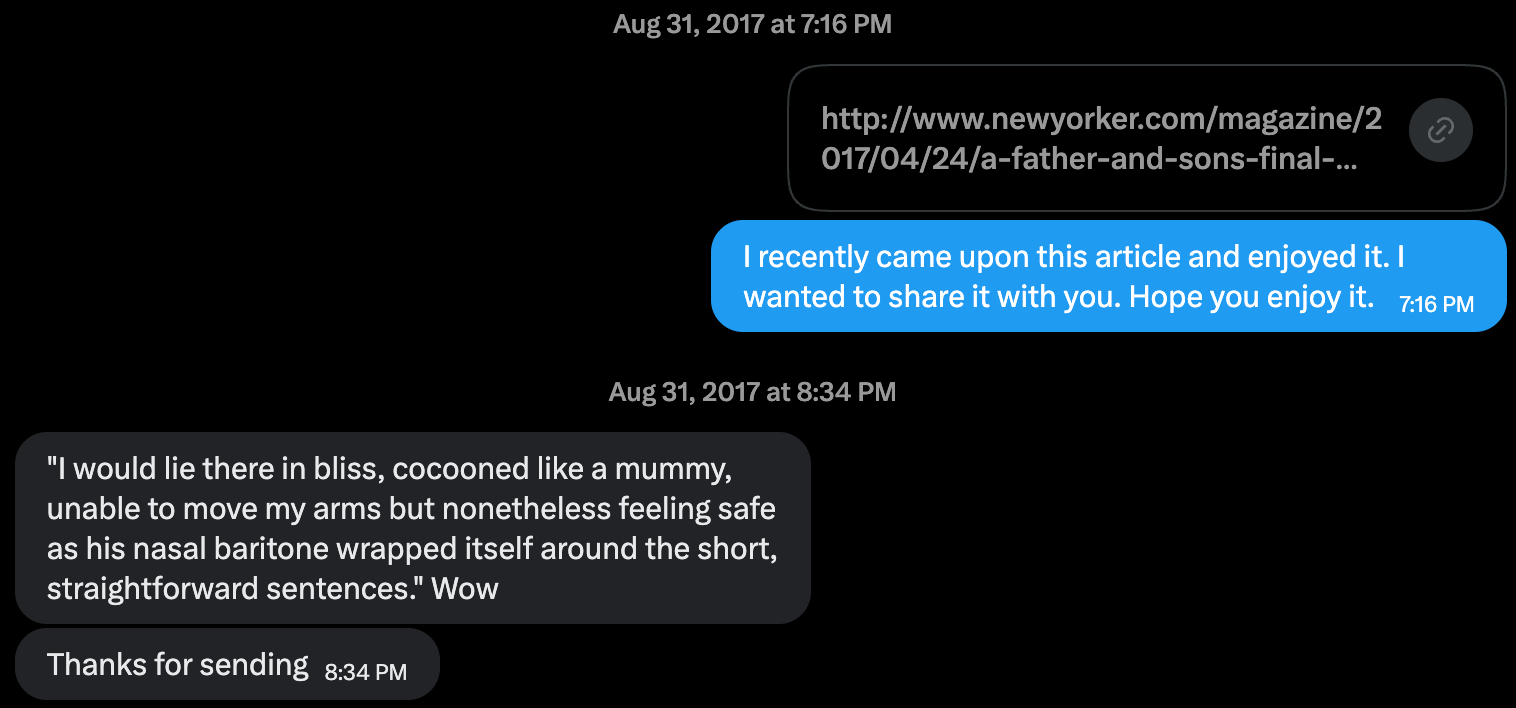
The university library quenched the know-it-all thirst in me. I read diaries of Civil War soldiers; hard-to-find short story collections; letters from musicians during the 1960s; biographies of any golden age Hollywood star my heart desired. However, while studying in the journalism program, I became fascinated with reading the huge collections of magazines. Magazines like The New Yorker or The Atlantic were bound, usually half a year’s worth in one collection, in an ugly-colored binding that seemed like they would be more homework than enjoyable. Inside, a history of feature writing, essays and columns about any subject imaginable was at my fingertips. These collections became an education. Perhaps the best example of this is Daniel Mendelsohn's A Father's Final Odyssey, published in 2017 in The New Yorker. The essay details a father-and-son journey to Ithaca and bounding over Homer's The Odyssey. Once I read that, I looked around and said to myself, “That’s what I want to do in life. Tell stories just like that.” The way Mendelsohn wrote about real life, yet making feel as if the writing is a piece of literature, astounded me. It was the first time I ever encountered something and seriously thought: That… I want to and could do that. One learns by action, and if I cannot write, I might as well engage with language by reading. Sentimentally, this kind of reading brought me back to the memory of reading the newspaper as a kid.
College continued to mold the reader I am today, while also reinforcing its crucial place in my life. Reading let me explore and dig deeper into what I enjoyed, and it gave me a confidence with my own voice as a writer. My time in college connected me with the subjects that interested me in fresh ways. This was a time in my life very much devoted to non-fiction reading, and my interest in history flourished. Looking back, this makes sense. I had the resources at hand to read about anything and different writers challenged me in different ways. The great ones tell a story, but they also ask questions about their subject and of the reader. Writers are curious by nature, and their curiosity on the page reflected back up to me. This period of reading gave me my current headspace when reading a book about a historical subject. The goal is not to simply retain information while reading (though that is a wonderful by-product); rather, the goal is to explore what the subject fits in relation to a larger historical, cultural, political and/or social context. The point-of-view of the writer, and the arguments they make, are the meat and potatoes.
For example, a favorite topic of mine is Hollywood history. Academic histories are fine; they give you facts. The real interesting reading is the biographies and memoirs by the actors, producers, writers and stars themselves. Do I expect the ironclad truth? Not really. Yet, crucially, those books have a specific perspective on careers, personal lives, and the world as the person revolves around it and how the world revolves around them. Bias exists and reading how they all relate to one another is fascinating. What were studios pushing in studio-sponsored biographies? How did actors or directors view the world around them, and does that differ from the academic viewpoint? When researching for an essay on Fred Astaire and Ginger Rogers, I read Ginger Rogers’ My Story. I had a blast reading the book and getting to know Ginger and her truth. There were facts that may have been skewed, but what came across the page was her charm and wit. Experiencing her personality adds depth to performances that allows me to enjoy them even more. This approach to non-fiction reading also illuminates in seeing the shift in academic scholarship in our own history. Joseph Ellis' biography on Thomas Jefferson, American Sphinx, from 1996 notes that Jefferson being the father to Sally Hemings' children was "inconclusive". After the book's publication, when DNA evidence made that claim a fact, Jefferson biographies since have been more open to the realities of the Thomas Jefferson-Sally Hemings story (including Ellis' writing). Tracking this academic thinking, and its greater cultural shift, across decades is a fascinating approach to reading about anyone in history. My approach to reading history by asking what a book offers the reader in a wider historical, cultural and social context makes for a more impactful reading experience. Sometimes, reading is not about the truth; it is about their truth – author, subject or both.
Since college, as a career in journalism became less of a reality for me, I have returned to fiction with a deeper appreciation. Today, I try to stay up to date with contemporary classics. I dabble here and there, and I do find myself having a good time with many books from the past few years. (Examples below.) But, as I currently sit here, my interests mainly lie in the classic literary canon. In a search to fill my blind spots in this arena, I have come to wonder: Why are these great? What makes a classic, well, a classic? We are told F. Scott Fitzgerald, Virginia Woolf, Langston Hughes, Toni Morrison (to name a few) are part of a great literary tradition that must be accepted and acknowledged as such. That may be, but believing in general statements is not enough. I need to find out why myself. Over the course of my adult life, I have come to realize that the answer, broadly, is that their craftsmanship in shaping a story with their skill at language touches the mind and soul of a reader unlike anyone else. It is a cold answer (they know how to pick the perfect word seems more pragmatic than wonderful), but it is a satisfying answer for someone with a lifelong obsession with the written word.
When I read fiction, right below wanting to read a great story, I strive to have a sentence bowl me over, shake me to my core and punch me in the gut. Story is key, of course, but to simplify the complexity of life into a sentence (or two) is an exhilarating experience. The ending to Ernest Hemingway’s The Sun Also Rises is such a case. The last sentence of the book – “Isn’t it pretty to think so?”, Jake's answer to Lady Brett Ashley’s comment about what could have been between them – is a sentence that continues to erupt so many thoughts inside my head. The sentiment from Jake can ring true or false; it can be a throwaway comment or one with the whole weight of Jake’s truth in it. The reader brings their own interpretation; their own truth. Fiction becomes alive. I believe the writer Tim O’Brien explains it best: “It’s the wistfulness of what we both lose and never had. Isn’t pretty to think that my dad and I could have talked. But it didn’t happen. It won’t happen. So, there is a sadness to it that feels to me fully human. ‘All that will not be’, which is going to be true for every human being in some way or another on this planet. It has a universality to it.” You may or may not agree with his reading of what that sentence means, but you understand O’Brien’s point of view. You make a connection. It takes one simple sentence to make a connection with the world around us. Fiction gives us that gift.
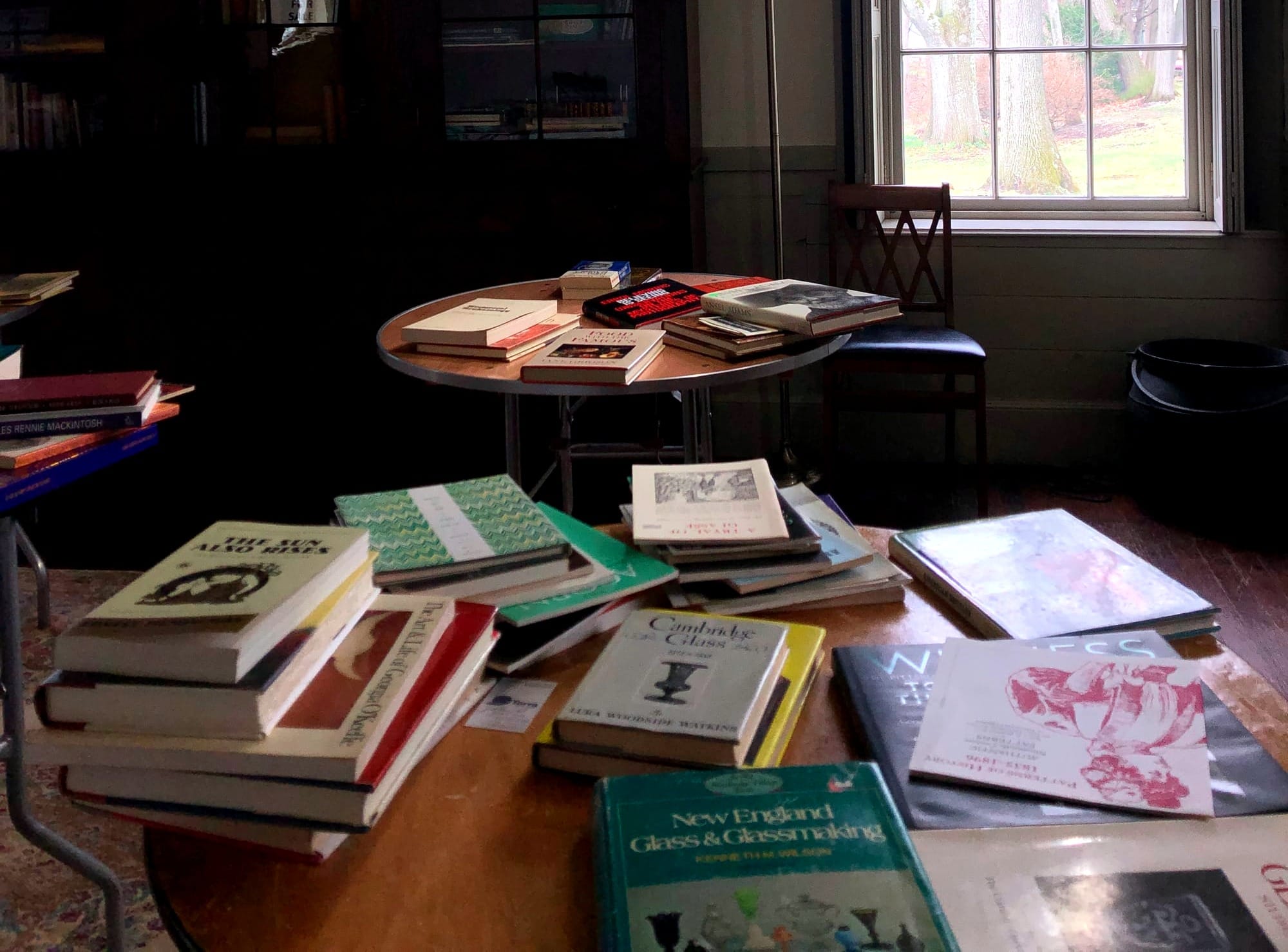
Admittedly, fiction is more than sentence construction. It starts with a good story; without that, the author cannot hope to make any connections with the reader. At the heart of a good story in books, novellas and short stories is the exploration of the raw emotions that run through humanity. The stories and emotions inside the fiction of yesterday or today remain a vital part of communicating the wonderful, sad, damning or inspiring truths of life. "We read not only because we cannot know enough people," the scholar Harold Bloom wrote, "but because friendship is so vulnerable, so likely to diminish or disappear, overcome by space, time, imperfect sympathies, and all the sorrows of familial and passional life." Recently, I read East of Eden by John Steinbeck, and in the 600 pages an entire world came to life. The characters inside lived their lives in a way that I felt closer to than some people I know today. I read fiction for that connection and for its other purpose it does so well: give us an understanding of the emotions of everyday life. What does true love feel like? What does it mean to hate? How do I handle the fear? A great writer strives to make you feel love, hate, disappointment, joy, fear, triumph in the characters and worlds they create. Fiction connects us to ourselves as well as the world. We cannot possibly go everywhere and experience humanity fully. We must turn to fiction; it invites us into new worlds that become familiar, or, perhaps, familiar worlds that open doors to new worlds. As I have poured myself into the great authors, I have learned that fiction best reveals the shared existence of humanity. "You think your pain and your heartbreak are unprecedented in the history of the world," the writer James Baldwin said, "but then you read."
And now you know me as a reader.
To readers, I hope you sense the kinship. We may tackle books in a totally different way, but the passion for reading is hopefully felt. To non-readers, I hope an inkling of inspiration was created to consider serious reading. I must say, these reflections are not a “how to” read. That must be solved for yourself. The good news is you can start reading, and read consistently, at any time and through multiple avenues. (I much prefer having the actual book, but I use an e-reader and I do not look down on audiobooks. Utilize your local library in every way you can. Just get the literature in you, one way or another.) Academics cover your eyes, as I will offer one piece of advice: it truly does not matter what you read, either. Just read. Choosing a book you feel (or are told) you have to read will be a miserable experience. Read what you enjoy; read what interests you. Get comfortable being by yourself, away from notifications and streaming, and explore the transformative and connective language of a book. A short story. An essay. A poem. If you stick with reading, your interests and threshold for challenging ideas and language will grow, change and flourish. From reading about UFOs and ghosts to trying to tackle deep, complex human stories, my journey as a reader took me to wild places and introduced me to many interesting characters. But reading affirms me of myself – a guy who wants to know about everything and how humanity connects on an emotional, spiritual and physical level. I do not have all the answers to the “universality” of life, but I keep reading to find out.
I believe, most importantly, that the more you read, the sooner you realize that books and all the different types of literature you could find possess the most endearing universal truth: you are not alone.
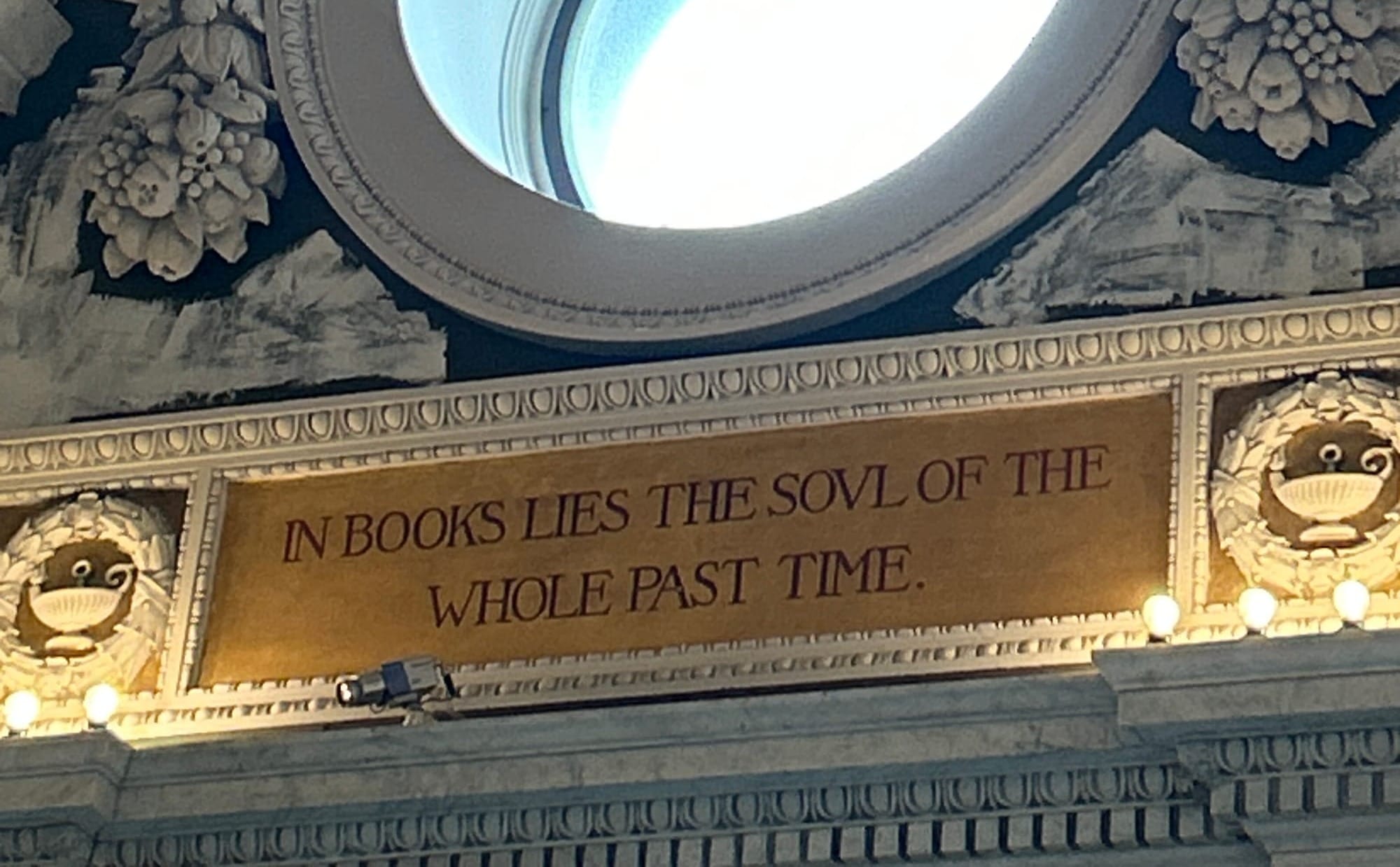
A Personal Book Canon
The following are my all-time favorite books, non-fiction and fiction, that range from being influential creatively, personally or just a damn good read.
Fiction
Of Mice and Men by John Steinbeck
Fahrenheit 451 by Ray Bradbury
Cold Mountain by Charles Frazier
The Sun Also Rises by Ernest Hemingway
Native Son by Richard Wright
Gone with the Wind by Margaret Mitchell
O Pioneers by Willa Cather
Passing by Nella Larsen
The Green Mile by Stephen King
Normal People by Sally Rooney
Brooklyn by Colm Tóibín
The Idiot by Elif Batuman
To Kill a Mockingbird by Harper Lee
Last Summer in the City by Gianfranco Calligarich
Like a Bird by Fariha Róisín
There There by Tommy Orange
The Most Fun We Ever Had by Claire Lombardo
Non-Fiction
Testament of Youth by Vera Brittain
Thomas Jefferson: The Art of Power by Jon Meacham
In the Garden of Beasts: Love, Terror, and an American Family in Hitler's Berlin by Erik Larson
Silent Spring Revolution: John F. Kennedy, Rachel Carson, Lyndon Johnson, Richard Nixon and the Great Environmental Awakening by Douglas Brinkley
The Heartbreak of Wounded Knee: Native America from 1890 to the Present by David Treuer
Midnight in the Garden of Good and Evil by John Berendt
This Land Is Their Land: The Wampanoag Indians, Plymouth Colony, and the Troubled History of Thanksgiving by David Silverman